Category Archives: Product Development

Four Quality Factors of Food

Quality Factors

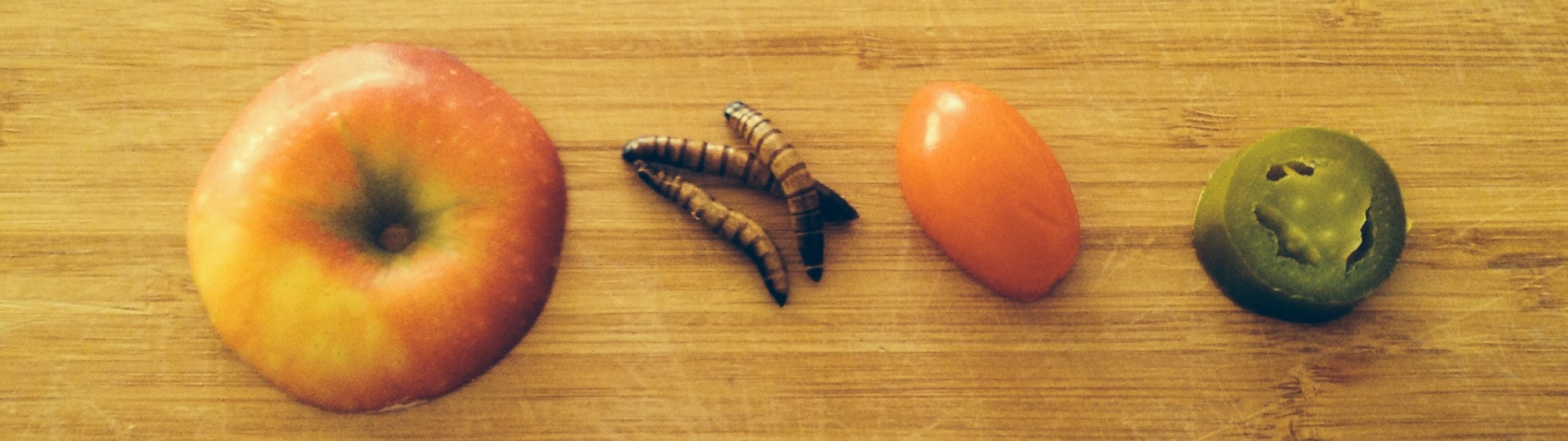
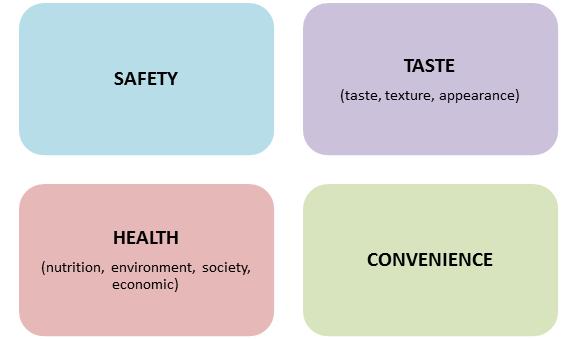
Safety, convenience, taste and health are intrinsic quality factors that affect food choices. Let’s take a closer look at these factors and see how edible insects score.

Safety – Unglamorous but the most important factor. Safety hazard examples include pathogens (E. coli), heavy metals (mercury) and pesticide residues. If a food product doesn’t meet basic safety requirements, it won’t ever make it into your kitchen. When comparing food choices, safety is not a point of differentiation because most safety risks have been eliminated for the consumer by using good manufacturing practices and processing. Wild harvested insects are not recommended for consumption because there is a risk that they may have picked up pesticide residue along their travels.

Convenience – Often taken for granted, convenience varies widely.

Not convenient: dry chick peas

Convenient: canned chick peas

Very convenient: prepared hummus

When it comes to edible insects, processing live insects can be quite a handful for the chef. Raising your own insects takes devotion. Providing minimally processed and processed insects is a possible opportunity to gain further acceptance of edible insects

Taste – This is the space where most of the competition takes place. After all, taste is king. If someone doesn’t like the taste of a food, they are not going to eat it again. Taste is usually a tradeoff between other factors. Canned crickets are more convenient than frozen but the taste and texture is probably better in frozen crickets. Crickets are visually striking which does not earn them any points. People generally don’t like the idea of an insect looking back at you when you are about to eat it. Turning crickets into a flour is an excellent way to by-pass this issue. If poached or fried insects are being prepared… chop them up.

Health – Based on large food company behavior, health only has one category, nutrition. America’s food system is not doing an adequate job addressing socio-economic costs. Brands are quick to tell you how much fiber is in their product but they don’t tell you if it’s GMO fiber or if it’s highly processed fiber. It doesn’t help that individual consumers are not aware that their food choices also have far reaching environmental, social and economic influences. Health is why people should stop eating feed lot beef. Insects get 5 stars for health.

Are insects ready for the masses?

Even though people who practice entomophagy feel that insects are safe to eat, the average person may not be so confident. When communicating about edible insects, safety should be addressed by stating that insects, that are produced using GMPs, are safe to eat. Safety will probably become a non-issue as people become aware that insects are tasty and good for you. Taste and convenience is where our food system does an excellent job at creating craveable and easy to prepare food. Just about every store sells cold soda. There is tremendous opportunity for innovation in these area. Insects can be prepared in a variety of ways and different species offer unique tastes and textures. Literature often sites that insects taste excellent and are considered delicacies. We just have to find the right presentation for the American palate. For health, the preferred way to raise insects is through regional farming operations. We need to be mindful when sourcing insects so that they are not raised on chicken meal and preferably not sourced internationally. I think insects are ready.

Fresh Cricket Tasting Notes

I ate crickets (acheta domesticus) from the local pet food store. They were largest live crickets in stock and looked healthy. I didn’t ask what their feed was (which I should have done) and just went for it. I popped them into the freezer to harvest them. ‘Harvest’ is the term that has replaced ‘slaughter’ when it comes to processing livestock.  I tried two preparation variants. Test 1 – boil rinsed crickets in salted water for 3 minutes. Test 2 – boil rinsed crickets in salted water seasoned with crushed garlic and dried chili flakes for 5 minutes. The cooked crickets were tasted as is with no additional components.

Test  1 – The flavor was sort of a mixture of chicken, lobster and shrimp; there was also a mild earthy background but it was not bad. There were strong salty and umami components. The texture was soft and pliable. I could bite through them without issue. I found dehydrated crickets in comparison have a brittle and fibrous texture but this was not the case with fresh. The fresh cricket was quite soft and very palatable. There was no need to remove the legs.

Test 2 – The seasoned cooking broth delivered a mild garlic flavor to the crickets. The flavor again was sort of a mixture of chicken, lobster and shrimp. Flavoring the cooking broth complimented the crickets well. My cricket boil seasoning can certainly be improved upon and designed to complement the end dish. Crickets would complement a shrimp boil nicely. The texture was soft; not noticeably different than the 3 minute boil.

Recommended recipe:

Linguini with Cricket Sauce… A twist on clam sauce. Substitute crickets for clams in your favorite clam sauce recipe. Crickets won’t release any moisture when cooking as fresh clams do so adjust the liquid content accordingly. Coarsely chop the cooked crickets so their flavor gets evenly distributed in the final dish.

“Canned” Bugs – Part II

My quest for canned insects has continued. I came across another pet food brand, JarassiPet, that produces canned insects. The information states that “nutrients and moisture are locked in the can”. I went to the local pet food supplier to pick up a can. I couldn’t find any so I asked for help. They didn’t have JarassiPet in stock but I was referred to ZooMed’s products. The customer service person pointed out that ZooMed also has “natural juices locked in the can”. Also that they are not for human consumption. I could hear the insects rattling around (sounded dry) in the can and it is made in China but I got a Can O’ Grasshoppers anyway.

Can O’ Grasshoppers was very aromatic with caramel-like aromas being prominent. I stir fried them in hot oil before tasting. They were generally not edible as prepared. Extremely strong and unusual sweet flavor and the main texture component was the chitin shell, the insides were sort of shriveled up and dark in color.

This was not what I expected so I messaged ZooMed. What I learned is that they are processed by adding insects to the can (without water) and ‘roasting’ them in the can. They probably use a retort procedure that kills all of the bacteria and preserves the grasshoppers. The process creates the strong roasted notes that, apparently, turtles enjoy.

Marketing Crickets by Weight

Selling crickets by number and age is fine if you are going to feed them to your pets. But it is not the information we (people who practice entomophagy) want. We want to the total weight of the crickets we are going to buy. This is how food is typically sold. The package of walnuts in my kitchen say “Net Wt 12 oz (341 g)”. This practice should be adopted when selling edible insect for human consumption.

Another consideration is the general size of the crickets. I recommend getting away from the “weeks old” categorization. Describing a chicken by its age at harvest is kind of weird. I think there are better descriptions we can use. The shrimp industry uses a number per pound system. “21/25” means that there are 21 to 25 shrimp per pound. The insect industry could adopt a similar system. For example a package of crickets might read:

Net Wt 12 oz (341 g)

Size: 200-250 crickets/lb

Shrimpers also use categories like jumbo, medium and tiny but these adjectives are somewhat open to interpretation and aren’t recommended.

Many insects undergo physical changes during their life cycle. For example crickets grow wings at about 4 weeks old. Categorizing based on a well-defined attribute could work. A producer could sell 2 varieties… “Adult Crickets” and “Wingless Crickets”.