Incredible Foods – a product and a plan

I have been blogging about edible insects for a couple years now. The end goal has been to start a food business. ‘Edible insects’ is an amazing niche with in the food industry that has so much potential. As an entrepreneur, its necessary to understand all the the risks you are taking when you start a business. That why many of my blog post have been on regulations. That being said, I feel that risks related to regulations are minimal when managed. As with any food food company, it is imperative that you are able to demonstrate that your product is wholesome and does not contain any public health hazards.

Finally, I have a product and a business plan that requires minimal capital and is low risk… Cricket Worcestershire Sauce.

cricket Worcestershire sauce condiment

Product Features:

  • Its easy to make – some of the ingredient can be sourced in a pre-blend so its really easy to produce. Making significant quantities is manageable in a non industrial setting. This is important to manage initial capital requirements. A small run will also serve as a market test.
  • Scale-able – This product can be scaled up to at a co-packer with out a hitch. (just need to find one that is OK with insects).
  • Flavor focused – other products on the market only focus on protein and nutrients. One of the benefits of entomophagy is that insects taste great! I hope that Cricket Worcestershire Sauce sets the bar for flavor delivery by insects.
  • Multi use – Cricket Worcestershire Sauce will be a conversation starter in you kitchen for weeks.
  • Low cost of raw materials – cricket powder is a high percentage of the total costs. Because this is a multi use product, the margins can be relatively higher.
  • Its safe – the pH is low (about 3.7) so its shelf stable.
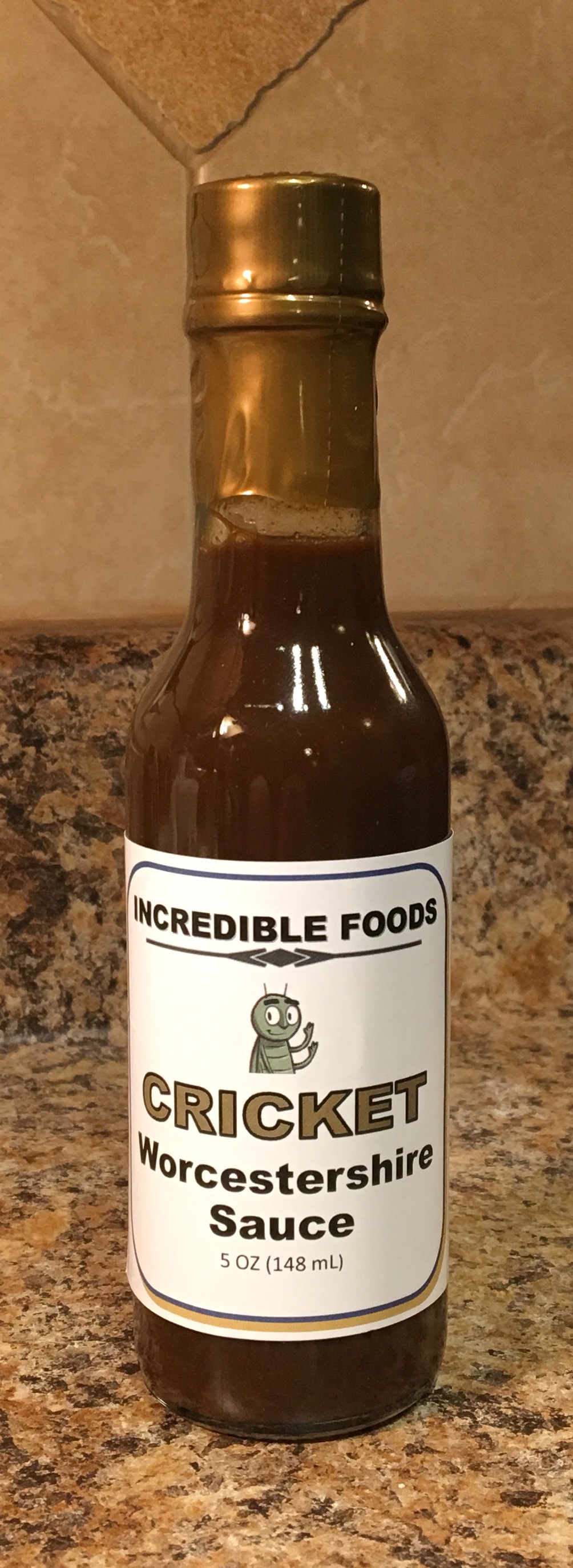
Cricket worcestershire picture

The plan:

  • First step is to get all of the general business stuff squared away.
  • Then make 200 bottles or 2,000 bottles?
  • Im going to blog more about the business plan in future blog posts.

More information about Incredible Foods can be found at: https://incrediblefoods.wordpress.com/
FDA response to inquiry

UPDATE: added a third and fourth reference.

Fourth: Food Navigator article that includes the standard response and additional follow up questions.

Edible insects: Beyond the novelty factor

By Elaine Watson+, 28-Sep-2016

If the edible insects market is heating up, and big name retailers from Publix to Sprouts are now stocking cricket bars, snacks and protein powders, why is Whole Foods – which has reportedly temporarily dropped all bug-based products – apparently cooling down?

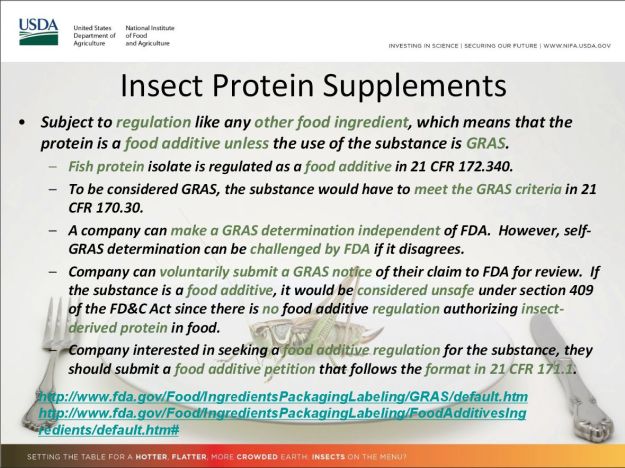
Third: A power point from by the director of the National Institute of Food and Agriculture (NIFA) Dr. Sonny Ramaswamy.

Here is the LINK. (the file is from Ben Guarino’s Inverse article.)

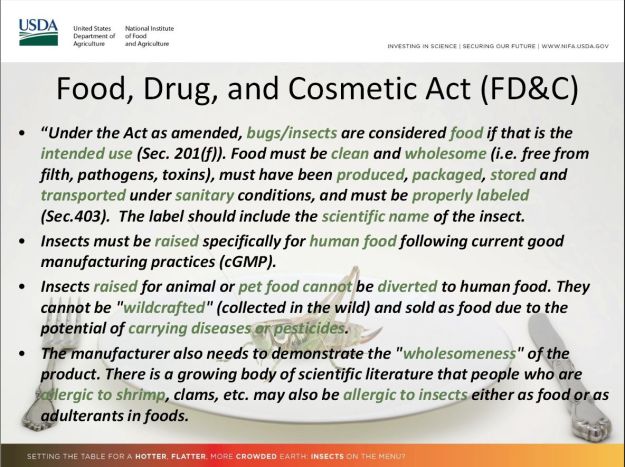
FD&C edible insects 1

GRAS edible insects

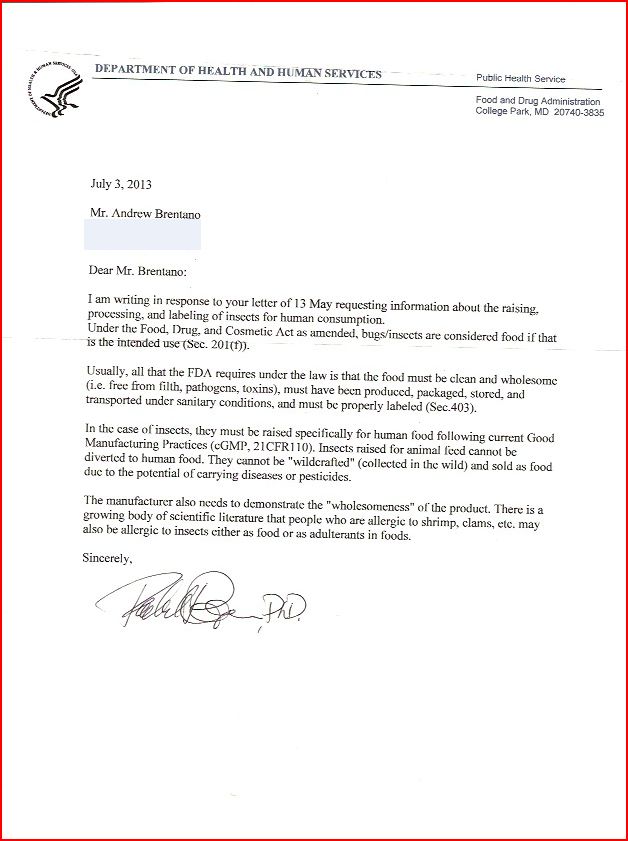
The first is courtesy of Andrew Brentano of Tiny Farms. Tiny Farms has an excellent forum, Open Bug Farm, that covers a wide range is topics on edible insects.

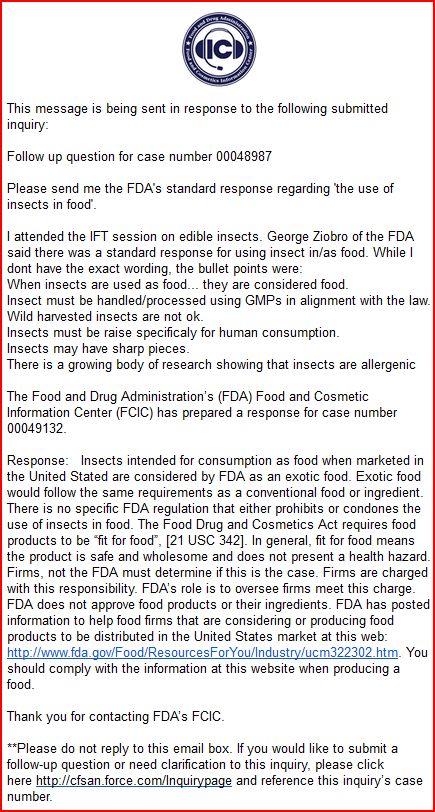
FDA edible insect response regulationI attempted to secure my own copy by messaging the FDA’s Food and Cosmetic Information Center (FCIC). The first response did not have much content so I sent a follow up note.

My interest in getting a copy came from the IFT (2015) panel discussion on edible insects. One of the speakers, who is from the FDA, mentioned that there was a standard response for edible insects. The key points he mentioned were on point with the letter Andrew received.

The response I received was slightly different and didn’t have some of the same key points.

FCIC FDA responseSome follow up questions I have from the letters:

  • Why don’t they match more consistently in content and language?
  • Why must insects be raised specifically for human consumption? Corn is diverted all over the place.
  • What is the basis for disallowing wild crafted insects? I feel its no different than trolling for shrimp.
  • There is no mention of needing a GRAS determination.
  • Whats the definition of ‘Exotic Food’ and why does it matter? This is the first mention of ‘Exotic Food’ I have seen. Its not in any regulations.

Please share any letter or response you have received.

Be in touch on Twitter at Bob the Cricketpic122

Edible Insects and Consumer Litigation

I have been blogging about government regulations in the US on edible insects. Current thinking is the the FDA/regulators will not press edible insects companies to stop making products. US Regulation

Today’s post will discuss the risk of consumer litigation for edible insect businesses.

Edible insect producers could experience class action law suits or individual lawsuits. The plaintiffs would need to prove damages and prove causation of injury. The legal structure of your business will affect your liability.

Is the FDA involved in consumer litigation? What can occur is that the FDA can send a warning letter… FDA Warning Letter to KIND via Food Navigator

Top 4 concerns for consumer litigation related to edible insects.

  1. Physical hazards – For example, dry roasted whole cicadas can be a choking hazard. Legs/exoskeleton can get caught in ones throat. It would probably not cause full obstruction of the airway. Objects that are round and the same size of the airway are more likely to cause blockage. A stuck leg could cause other foods to get stuck also. See The American Academy of Pediatric Policy Statement on choking prevention. I feel a choking hazard warning is not needed. If a piece of insect gets trapped in ones throat and doesn’t go away then, I recommend that the consumer seeks medical attention to have it removed. Very annoying but not likely to cause long term harm.
  2. Asphyxia– Insect are a potential food allergen. More info on insect allergens.
  3. Antinutrients – Not well studied and would be difficult to prove harm.
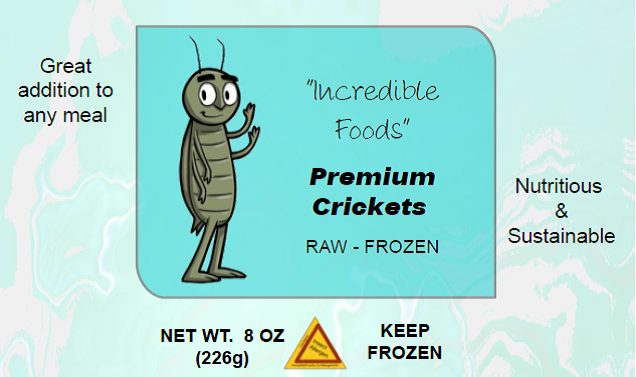
  4. Claimscricket front label frozen warning
    1. Nutrient claims – The nutrition facts panel of a processed food need to be accurate. One of the benefits of edible insects is the protein and mineral content. Nutrient contents of insects can vary greatly by species and how they are grown, harvested and processed. Accountability falls to the consumer goods company and not the suppliers or manufacturers. Front of package claims must be in line with regulations. FDA’s Food Labeling Guide
    2. Animal welfare – We know that cricket can be cannibals if they don’t have enough space or food. How can we qualify that the crickets are being raised and harvested humanely?
    3. Sustainability – Companies often promote environmental benefits on their website as a key feature of their product. Do insects meet third party standards for sustainability? Report Debunks Walmart’s Claims of Sustainability and Fairness in Its Food Supply Chain

The best way companies can manage risk from consumer litigation is to use an allergen warning. Secondly, any claims must be supported with data and documentation.

Did I miss anything? Should industry be using a choking hazard for whole orthoptera products?

Let us know in the comments.

Industry Experience on Regulation

I sent a questionnaire to a dozen or so leading entomophagy companies in North America (the questions are listed in this post).

The responses received were overall positive. Not all parties responded and some responses were limited due to the confidential nature of the topic.

Key take a ways:

  • Regulators, including state and local agencies, are aware that the companies are producing insect containing food products.
  • Producers are demonstrating that the insects used are wholesome and that the food is being produced using Good Manufacturing Practices (GMPs).
  • Food safety information in the form of a GRAS dossier has not been required by regulators.
  • Allergen risk is being communicated.
  • Consumers are informed that their products contain insects.
  • No one is aware of efforts to limit used of insects as food.