Is Cricket Flour Actually Tasty?

The short answer is not really. That does mean we shouldn’t eat. Is there something we can do to make cricket flour taste better?
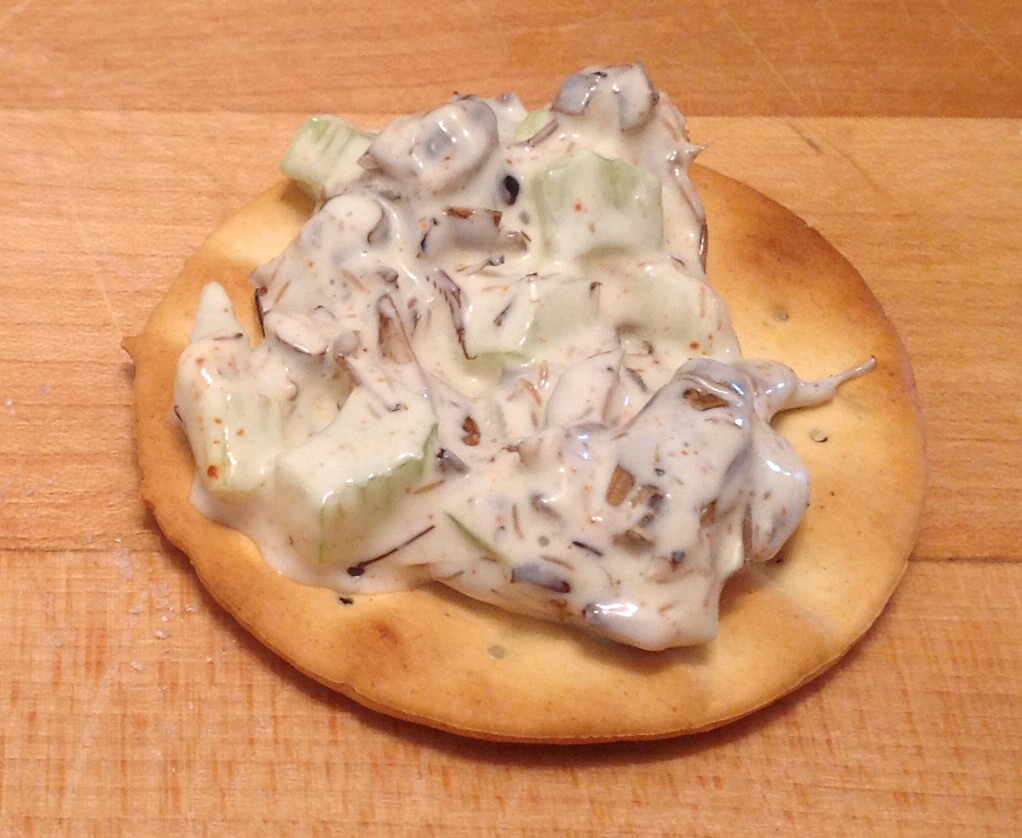
cricket salad on cracker

Cricket Salad on Sesame Cracker

Cricket flour is low in fat, high in insoluble fiber, high in cooked protein, and has a ‘distinctive’ flavor. These characteristics are generally not well liked.

Here is what to do about it:

  • Add Fat – if making snack bars or cookies, make sure there is a good amount of fat in the system. Aim for at least 10%. Some classic and addictive foods like potato chips and pepperoni contain around 30% fat. Sources of fat can simply be vegetable oils. Nuts butters are high in fat. Coconut oil is great because it has a high melting point which can add to a creamy mouth-feel.
  • Pulverize flour to a very fine particle size – this will decrease the perception of the chitinous shell. Cricket flour sometimes has a sandy mouth feel. A smaller particle size will improve the texture. And the fat added above will lubricate the particles.
  • Balance taste for optimum cravablility – cricket protein can alter the taste of your favorite recipe. Protein can add bitter and umami tastes. Play around with the amount of salt and sweetener in your recipe. Dont hesitate to add salt. Salt can really improve the overall taste and flavor. Protein can also contribute to a chalky texture like in high protein energy bars. Look at other products to see what they have done to help improve the texture.
  • Bam! – Use lots of flavoring components to over power the flavor of the cricket flour. This is the oldest and best flavor masking technology in the book. Herbs, spices and other flavorings can provide your product with a unique fingerprint and really improve the overall likability. Keep it simple by using one spice or use a complex blend like pumpkin spices. Dont forget the vanilla.
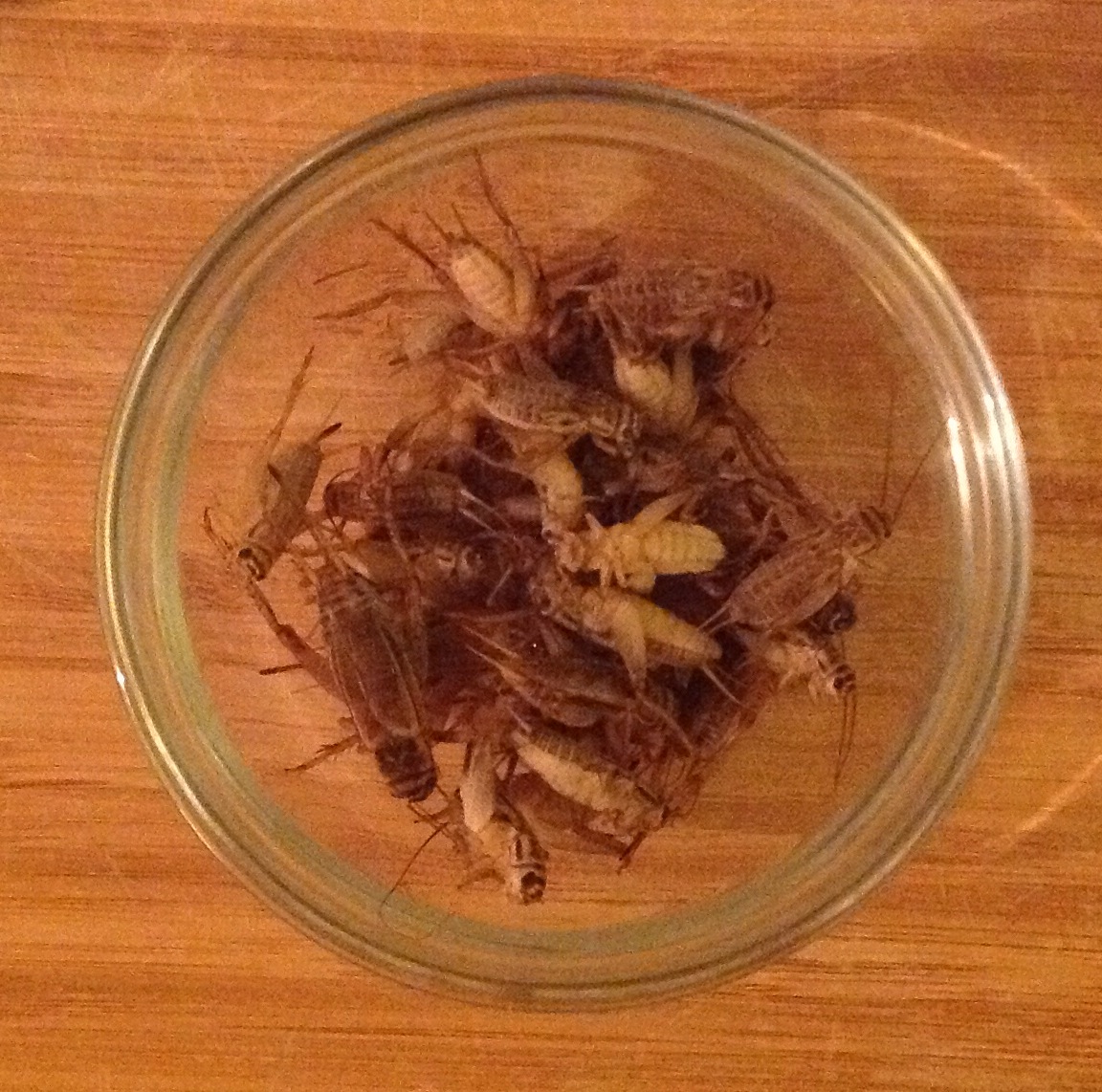

How Are Crickets Processed and Used As Food – Cricket Flour

Cricket Flour is a way that insects are being introduced to western diets. The flour is used as an ingredient and not the main feature. Milling crickets into a flour also takes away the ick factor. So if you buy a product with crickets in it at the store or online… how did the crickets get there?

Most commercial food products are made the same way you make them at home. Commercial food factories just make a lot more, and efficiently. There are more differences of course, commercial production might use a motorized pump to move liquid from one place to another where in a kitchen it would just be done by hand. And because commercial operations create a lot of food, food safety takes on a different context. Processing of crickets for commercial use is similar to what you would do at home.

Cricket used in food in North America are farmed. Not unlike the way we farm chickens. There farms that use good quality feed and take steps to ensure that the crickets are well taken care of. And there are farms that don’t. Its hard to find out where food ingredients actually come from so its good to ask details.

Cricket farming is an established business for around the globe. In western cultures, most of the crickets end up as feed for exotic lizards. Demand for crickets is low compared to a lot of other industrial products. Farming is carried out with manual labor which is why crickets are more expensive than beef and chicken even though the inputs for crickets are less.image_1 (2)

Crickets are frozen to harvest them. This is a humane way to kill them. It also makes the next steps for processing easier because they are not jumping around. Frozen is a good way to keep crickets until they get processed. They can also be shipped from the farm to the processor frozen.

Next… washing. Just to make sure they don’t have any frass on them and to remove any foreign material.

Blanching is next. Arguably you can skip this step because crickets will be cooked during the dry roasting process.

Dry roasting develops flavor and dehydrates. Removing moisture is necessary to make it shelf stable. Microbes need water to grow. Freeze drying is another route. Dry roasting is more efficient though.

Milling… Dried crickets are then milled into a flour.

From here you can add cricket flour to a number of different food products. Snack bars, breads, cookies, dips, etc.

Commercial food product and ingredients are evaluated after they a produced to ensure quality. Microbe counts are a standard check to make sure there hasn’t been any contamination.

Would you buy cricket products or make your own? Please Tweet your reply.

Natural Habitat Farming of Grasshoppers

There are grasshoppers everywhere in the Dallas-Fort Worth area of Texas. You see them during the day as they jump away from as you go about your business. And you hear them at night as they sing you to sleep. They thrive in the open plains and short grass.

Photo Jul 27, 3 09 29 PM

How can we capitalize on the fact that grasshoppers love it here?

The consensus is that harvesting insects from the wild is risky because we don’t know where they have been (As in the neighbor’s yard where they just sprayed fertilizer and pesticides). What if I go out into a state park and catch some tasty treats there? What if we farm grasshoppers in the ‘middle of nowhere’ Texas?

The Plan

  1. Buy, rent or borrow a large plot of prairie land away from other cultivated land.
  2. Select a grasshopper species that is already successful in that area. Differential Grasshopper?
  3. Foster shrubs and grasses that accommodate that species of grasshopper. Mow the perimeter to prevent inward or outward migration.Photo Jul 27, 2 52 38 PM
  4. Add the grasshopper to the field. You probably need to farm eggs/nymphs in a controlled setting like they do for crickets. I understand this can be difficult but it may be easier if the grasshoppers only live part of their life cycle in a man-made environment.
  5. Sit back and relax as the grasshoppers mature.
  6. Harvest by attaching nets to traditional farming tractors and sweep the plot in an inward spiral. They do this by hand in Asia.
  7. Freeze for storage.

Plan B:

Just go to a middle of nowhere field and harvest. Depending on the time of year there may be plenty to catch. Then send a sample out to a lab for analytical testing including heavy metals, pathogens and pesticide residue. The contamination issue is solved assuming the results come back negative for any bad stuff. Make huge profits with little work by selling the catch to restaurants or processors.

Plan C and more: This Mother Earth News article has great insight on grasshopper harvesting.

Key Points:

  • Farm insects in their natural habitat and climate.
  • Instead of controlling the entire farming operation, let grasshoppers be grasshoppers and ensure safety and wholesomeness of the product with post-harvest testing. Companies such as Certified Laboratories specialized in doing such safety analyses.
  • What insect thrive in your area?

How to get a contract manufacturer for edible insect products.

thinking from microsoft

Microsoft Office

Let’s face it. Most people aren’t that interested in eating insects. If I extrapolate, most contract manufacturers (co-packers) won’t be that interested in making insect products like cricket bars or cricket soups.

Part of the reason is that they just won’t have the same passion for entomophagy. Entomophagy is considered innovative in western cultures and some people just don’t see the value in it. Secondly, and probably a bigger factor, is that adding a new type of food ingredient in a food facility is a business risk. People connect insects with filth and uncleanliness so their other co-packing customers might balk at the idea of sharing production equipment with crickets or meal worms. Insects are considered allergenic. So would other products sharing production equipment need an allergen warning such as “made in a facility that also process insects”? Another issue is that the regulatory framework is unclear. Insects as food is not specifically mention anywhere in anywhere in US regulations besides the part on action defect levels. A contract manufacture that you find suitable to work with probably has a successful business. Why would they want to do anything to jeopardize business model?

The first step when talking to a contract manufacturer is to explain the benefits of insects as food.There are a lot of great reasons to get into the entomophagy business. This is a home run.

Secondly, be prepared with counter points in case your co-packer has objections. Below are some talking points to appease potential co-packers (Mostly applicable to the US but can be transferable for other regions).

  • Insects are already in products. Ingredients like dates, peanut butter, chocolate and cinnamon have insect parts in them. Insects are an unavoidable and inherent in some ingredients.
  • Insect cross contamination poses no inherent health risk. The amount from cross contamination would be less that the levels listed in the Defect Levels Handbook. Good manufacturing essentially eliminates cross contamination.
  • Disclosure to other co-packer customers is not necessary as it does not affect their product. (Given that the facility/equipment is well maintained).
  • A manufacturing warning is not needed. This is based on the assessment that the amount of insects from cross contamination would be negligible compared the action defect level.
  • The likelihood of the product being recalled is very low. I wrote a blog post about this Read it here.
  • State that the insects being used are food grade. Have documents available indicating that they have been farmed in compliance with FD&C Act Chapter IV: Food and processed in compliance with CFR Title 21 Food
  • Minimally process insects can be considered a ‘raw agricultural product’ and there for do not need a GRAS determination. There is a grey area consisting of whole foods that does not get the same scrutiny that additives do.
  • As back up, also have information specifically related to making a GRAS determination. Don’t forget, GRAS substances do not require pre-market approval.
  • Also mention that regulatory agencies do not consider edible insects a priority. They have much more pressing concerns. Most likely, edible insect businesses will fly under the radar for a while.

I hope this helps.

Microsoft Office

Microsoft Office

Please reach out to me if you have any questions. I would love to help.

Go back

Your message has been sent

Warning
Warning
Warning
Warning

Warning.