How To Freeze Crickets

Put them in the freezer… but how long will they remain good for?

The shelf life of a product has been reach when one of the quality attributes (flavor, texture, color) is no longer at an acceptable state. Food products change during storage but only when the changes reach a certain point do we say the shelf life has been reached. Small changes in quality are often acceptable.

Frozen storage changes the flavor

Microsoft Office

Microsoft Office

The main quality attribute that is likely to change during frozen storage of crickets is flavor. There are a couple pathways for flavor changes to happen.

One mechanism is freezer burn – Freezer burn happens when frozen moisture in the crickets sublimates. This leaves patches of dehydrated cricket. The dehydrated areas are much more susceptible to oxidation resulting of off flavor. Crickets have a high surface area to volume ratio so this is definitely something that can happen. Water can also recrystallize affecting texture.

Second is bacterial/enzymatic activity – Raw crickets have bacteria on them as with most raw animal products. Some bacteria are still active at frozen temperatures (but much slower). Bacteria also contain enzymes that can speed up changes. There may also be enzymatic activity happening from cricket enzymes originating in the digestive organs. Eventually bacteria and enzymatic action are going to cause unwanted changes in flavor during prolonged storage.

2 Solutions To Extend Shelf Life

Apply a heat treatment before frozen storage to decrease bacterial load and denature enzymes. Blanching for 2-3 minutes would do the trick. Most vegetables are blanched before frozen storage to inactivate enzymes. Heat treatment will also denature the meat protein so if someone wanted to make sausage, they would need to add some other binder.

Glazing crickets in ice provides a protective coating and limits oxidation. This is done by spraying frozen crickets with ice cold water until a glazed is formed. Alternatively, crickets can be dipped in an ice bath and refrozen. Glazing is commonly used for seafood. Here is a link for glazing basics Seafish.org – Glazing.

Shelf Life Estimates

I looked at data for shrimp and also lobster and crab to support these estimates. These are estimates and and I have not performed any testing.

Crickets Home Freezer 0F Commercial Freezer -18F
Raw 1-2 months 3 months
Raw Glazed 3 months 4.5 months
Cooked 3 months 4.5 months
Cooked Glazed 5 months 6 months

How to test shelf life:

Like I said, these are just estimates. We need to start accumulating data. There are a lot of technical considerations to consider when executing a shelf life test. Here are some steps to get you started.

Decide how often you will make an evaluation. Testing once a week should be about right.

At the start, freeze packaged crickets. Make sure you freeze enough crickets.

Evaluate crickets right away on day 0 and on day 1. Some changes might already have taken place due to the freezing process. Take note of flavor, texture and appearance.

Follow the same cooking method as precisely as possible for each evaluation.

Evaluate at set intervals. Also prepare freshly frozen crickets so that you have a comparison. This may not always be feasible so refer back to your notes.

Note when the quality has deteriorated to the point where it does not meet your standards.

Most importantly, share the results and include lots of details like the temperature of your freezer and packaging. Post any shelf life results in the comments section here or send me a message.

Shelf life information is important not just for consumers but also for farmers and processors.
Cricket Tasting Notes – Poached, Sauteed and Canned

The Crickets

I purchased 1000 1-inch crickets via mail order from an animal feed insect farm in the US. The crickets were shipped from a different farm than I ordered from. I’m not sure why.

Unfortunately, the package did not meet the live guarantee. There were about 2-3% crickets that were past their prime. I refrigerated the whole package for an hour then sorted the crickets on the patio. Some were lively but I was able to separate the good ones from the bad ones and frass. It was quite an event. After sorting, the crickets were placed in the freezer until used. 1000 crickets yielded 1 lb. I didn’t measure this but the bulk volume was about 5 cups.

It would be a great service if cricket farms offered sorted frozen crickets (like Millennium Farms). Live crickets can easily be separated from the chaff at the farm. The crickets that climb the egg cartoon type ladders are alive and well. They can then be place directly into a freezer. Frozen crickets might be something pet lizards and owners like too. Frozen is more convenient and better tasting than dehydrated.

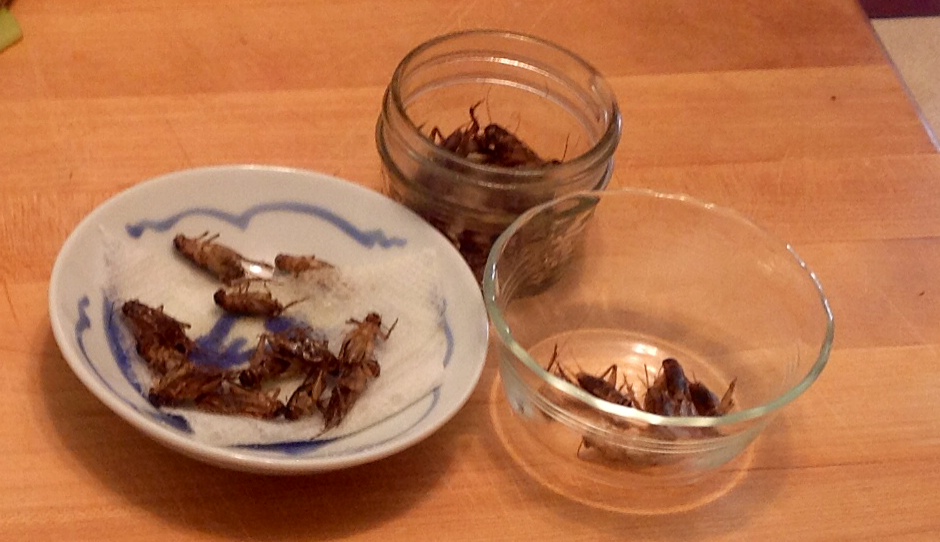
Three Preparations:Cricket canned poached sauteed

Poached: Crickets were poached in boiling salted water for 2 minutes

Sauteed: Crickets were sauteed in hot neutral vegetable oil for 2 minutes

Canned: Crickets were poached in boiling water for 2 minutes, drained, added to glass canning jars. Boiling water was added to cover crickets, a pinch of salt was added. Crickets were processed for 90 minutes at 15 PSI (250 Degrees F) using recommended canning procedures.

Tasting Notes:

Poached: Medium intensity flavor impact. Earthy/mushroom-like, brothy, vegetative, sulfury. The texture of the exoskeleton was pliable and slightly chewy. Females had crunch from the eggs.

Sauteed: Stronger in flavor. Shrimp/seafood like flavor notes were noticeable. The shell was slightly brittle and broke apart easily with chewing.

Canned: Mild in flavor. Earthy, brothy, vegetative flavor notes. The texture was very soft. The difference between males and females was less noticeable. The canning liquid was slightly cloudy and brown in color (similar to beef broth). The canning liquid was brothy/meaty in flavor and had a strong umami impact.

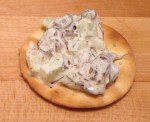
Recipe Ideas:cricket salad on cracker

Here is what we did with our bounty. The poached crickets were chopped and used in a scallion, mushroom and cricket omelet. Some of the poached crickets are being made into cricket flour. The sauteed crickets were just eaten as is with a little salt. Saute to your liking, I would have preferred them a little more crisp. The canned crickets were used in cricket salad (crickets, celery and mayo) on crackers. All were well liked.

Insect food allergens are a bigger issue than previously thought

Potential insect allergens may cause the FDA to disagree with a GRAS determination. This premise means that an ingredient being added to food that is an allergen, like whey protein concentrate, would not be allowed. How is whey powder allowed as a food ingredient? I feel like I am missing part of the puzzle. But let’s not get into this for now.

There are a lot of food products that contain potentially fatal allergens. Regulators feel the danger is well managed by requiring allergen containing products to state that they contain allergens. The allergens that cause reactions are also well known to consumers. A person with a milk allergen knows that they can’t consume dairy products and they know to look at the ingredients and/or allergen statement to find out if the food is OK. We don’t have this luxury for insects. People don’t know that insects can cause a reaction and they don’t know if they will be affected if they eat insects.

Im making the assumption that some people are allergic to insects. Not all insects may be allergenic. Very few people may be allergic but we just don’t know. Protein sequencing can determine if proteins present in crickets, for example, are known allergens. The Food Allergy Research and Resource Program has an online database and other resources. While the technical information may be helpful, for now, a practical approach to addressing the issue is needed.

Proposal for Insect Allergen Communication.

Whether insects are being added to processed foods, sold as an agricultural product or used in restaurant dishes; a common platform for communicating the allergen risk can benefit entomophagy.

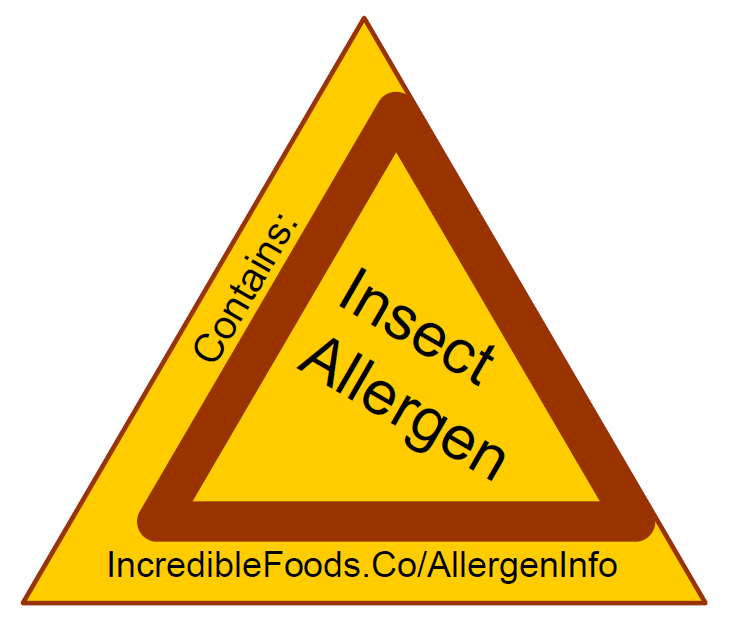
A visual to communicate risk:

  • Can be used on product packaging, posters and more.

Insect Allergen Warning Entomophagy

A source for more information:

Link to website about allergens

What allergens are in insects?

Who may be affected by insect allergens?

How do I find out if I am allergic?

What do I do if I have a reaction?

(I cant answers these at this time. Go to http://www.foodallergy.org/ for general Food allergies information)

 Not yet!

I don’t think we need to take these step yet. A strong warning may scare people from trying insects for the first time. However, this approach is an option to prevent regulator objection. This option could also be presented if and when any regulatory bodies object. Take a look at how the FDA addressed Added Caffeine in Gum. A potentially dangerous food ingredient (caffeine) was added to a food where it is not normally present (gum). A regulatory objection will probably start as a negotiation and not a new law.

I recommend a label explicitly stating that insects are an allergen, then providing more information about who is likely susceptible:

ALLERGY WARNING: Contains Insects (people who are allergic to shellfish may also be allergic to insects)

Food Recalls – Can this happen to entomophagy products?

As we all know, a food recall is bad PR. What reasons do recalls take place and who initiates recalls?

Most recalls are initiated by the manufacturer. The top two reasons foods are recalled are for undeclared allergens (ex. milk) and pathogens (ex. salmonella). Any product that violates the Code of Federal Regulations (CFR) or the Federal Food, Drug, and Cosmetic Act (FD&C Act) should be recalled.

The FDA states that they hear about a problem a variety of ways:

  • A company discovers a problem and contacts FDA.
  • FDA inspects a manufacturing facility and determines the potential for a recall.
  • FDA receives reports of health problems through various reporting systems.
  • The Centers for Disease Control and Prevention (CDC) contacts FDA.

Up until fairly recently, the FDA did not have the authority to mandate a recall. They now have the authority to mandate a recall with the passing of the Food Safety Modernization Act (FSMA).  From Food Safety News: FDA Reports Only One Use of Mandatory Recall Authority To Date . The FDA would first request a recall, and if matters are not sufficiently handled, the FDA would then mandate a recall. It seems unlikely that edible insect products would get to this stage. My understanding is that the FDA can also proactively send a desist letter for products before they get to market.

A recall request is a more likely scenario. Here is what the Regulatory Procedures Manual says about requesting a recall:

“An FDA request that a firm recall a product is ordinarily reserved for urgent situations. The request is directed to the firm that has primary responsibility for the manufacture or marketing of the product when the responsible firm does not undertake a product recall on its own initiative. FDA requested recalls are most often classified as Class I. Generally, before FDA formally requests recall action, the agency will have evidence capable of supporting legal action, i.e.seizure. Exceptions include situations where there exists a real or potential danger to health, or in emergency circumstances such as outbreak of disease involving epidemiological findings. The completion of either a firm initiated or FDA requested recall does not preclude FDA from taking further regulatory action against a responsible firm.”

Recall classes from FDA website:

Class I: Dangerous or defective products that predictably could cause serious health problems or death. Examples include: food found to contain botulinum toxin, food with undeclared allergens, a label mix-up on a lifesaving drug, or a defective artificial heart valve.

Class II: Products that might cause a temporary health problem, or pose only a slight threat of a serious nature. Example: a drug that is under-strength but that is not used to treat life-threatening situations.

Class III: Products that are unlikely to cause any adverse health reaction, but that violate FDA labeling or manufacturing laws. Examples include: a minor container defect and lack of English labeling in a retail food.

If insect products were to be recalled just for having insects, my understanding is that it would be a class III. There is not evidence to supports that farmed insects pose a “slight threat of a serious nature”. Insect products could have a Class I designation if they are contaminated with pathogens etc.

One situation where edible insect products could be subject to recall is by not meeting GRAS criteria. If a GRAS determination is deemed not valid, then the products would be in violation of manufacturing laws. This scenario can happen when the FDA (in partnership with state regulatory agencies) inspects a manufacturing facility. I recommend that firms have at least some documentation that supports a GRAS determination be internally filed. So if inspectors question the safety of using insects as food, the firm will have information detailing its safety, and hopefully prevent an escalation of a safety issue/ recall/ facility shutdown.

Where are we at now?

  • The FDA is marginally aware that insects are being introduced into the food supply
  • The volume at which insects are being consumed is very low
  • Manufacturers that use insects have a GRAS dossier available upon regulatory inspection?
  • The FDA’s risk assessment of insect containing foods (without other hazards) would result in low risk and therefore not a priority to the FDA when considering a proactive recall

What else do we need to consider?

  • There may be ways for regulatory agencies to prevent manufacturing/marketing of products before they get to a recall stage.
  • State and local rules vary state to state and may also cause, unaccounted  for, road blocks.